_edited_non_transparent_edited.png)
Master the Perfect Spaghetti Carbonara Recipe
- Chef Rigatoni

- Jan 19
- 4 min read
There’s something magical about the way a simple plate of pasta can transport you to a sunlit piazza in Rome, where laughter mingles with the scent of fresh basil and simmering garlic. Today, I’m inviting you into our kitchen at Pesto Pasteria to master the classic carbonara cooking - a dish that’s as much about tradition as it is about joy. This isn’t just a recipe; it’s a story told through eggs, cheese, and pancetta, a story that has been whispered from Nonna to Nonna, and now, from my heart to yours.
The Heartbeat of Classic Carbonara Cooking
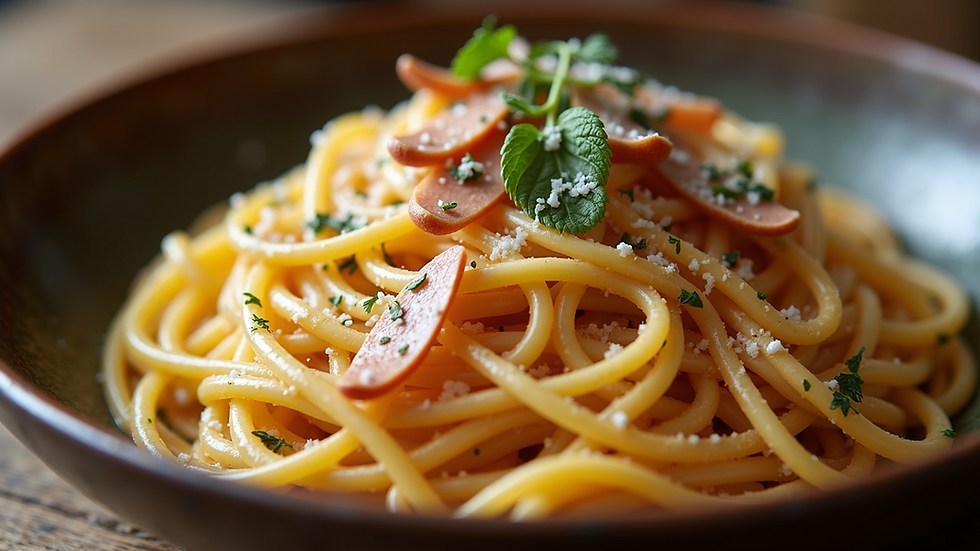
Let’s start with the soul of this dish. Carbonara is deceptively simple - just a handful of ingredients, yet it demands respect and precision. The magic lies in the technique, the timing, and the quality of each component. Imagine the creamy sauce that isn’t cream at all, but a silky emulsion of eggs and Pecorino Romano, kissed by the salty crunch of guanciale. It’s a dance of textures and flavors that awakens your senses.
When you cook carbonara, you’re not just making dinner; you’re joining a centuries-old tradition. The pasta must be al dente, firm to the bite, ready to soak up the luscious sauce. The guanciale, cured pork cheek, renders its fat slowly, infusing the dish with a smoky richness that pancetta or bacon can only dream of. And the cheese - sharp, salty, and nutty - ties everything together like a warm Italian embrace.
Ingredients That Tell a Story
Every ingredient in carbonara has a tale to tell. Let’s break down the essentials:
Spaghetti: The long, slender strands are perfect for capturing the sauce. Choose a high-quality durum wheat pasta that holds its shape and texture.
Guanciale: This is the star. Unlike bacon, guanciale is cured pork cheek, offering a delicate balance of fat and flavor. If you can’t find it, pancetta is a decent understudy, but remember, authenticity counts.
Eggs: Fresh, free-range eggs are non-negotiable. The yolks provide richness and color, creating that signature creamy texture without a drop of cream.
Pecorino Romano: This sharp, salty sheep’s milk cheese adds depth and a touch of tang. Parmesan can be a backup, but Pecorino is the true classic.
Black Pepper: Freshly cracked, it adds a spicy kick that cuts through the richness.
The beauty of this dish is in its simplicity. No garlic, no onions, no cream. Just pure, honest ingredients that sing together.
The Art of Perfect Timing and Technique
Now, let’s get to the heart of the matter - the cooking. Carbonara is a lesson in timing and patience. Here’s how we do it in our kitchen:
Render the Guanciale: Cut your guanciale into small strips or cubes. Place them in a cold pan and slowly heat. This gentle rendering allows the fat to melt out, crisping the meat without burning it. The aroma will fill your kitchen like a warm Italian afternoon.
Cook the Pasta: Boil your spaghetti in salted water until al dente. Remember, the pasta will continue to cook slightly when mixed with the sauce, so don’t overdo it.
Mix the Eggs and Cheese: While the pasta cooks, whisk together the egg yolks, Pecorino Romano, and a generous amount of freshly cracked black pepper. This mixture is your sauce - rich, velvety, and ready to coat every strand.
Combine with Care: Drain the pasta, reserving a cup of the starchy cooking water. Toss the hot pasta with the guanciale and its rendered fat. Remove from heat, then slowly fold in the egg and cheese mixture, stirring vigorously. The residual heat cooks the eggs gently, creating a creamy sauce that clings to the pasta. Add reserved pasta water as needed to loosen the sauce.
This step is where many stumble. Too hot, and you’ll scramble the eggs; too cold, and the sauce won’t emulsify. It’s a delicate balance, but once you get it, you’ll feel like a maestro conducting a symphony of flavors.

Tips and Tricks from Our Italian Kitchen
I’ve spent years perfecting this dish, and I’m here to share some insider secrets:
Use a large pan: It gives you room to toss the pasta and sauce without losing any of that precious sauce.
Don’t rush the guanciale: Low and slow is the mantra. You want crispy edges and rendered fat, not burnt bits.
Reserve pasta water: This starchy liquid is your secret weapon for adjusting sauce consistency.
Pepper generously: It’s not just seasoning; it’s part of the flavor profile that defines carbonara.
Serve immediately: Carbonara waits for no one. It’s best enjoyed fresh, while the sauce is still glossy and warm.
And remember, every dish tells a story. When you plate your carbonara, think of the hands that cured the guanciale, the sheep that gave the milk for Pecorino, and the generations of cooks who have passed down this recipe. You’re not just eating; you’re connecting with a rich heritage.
Bringing It All Together: Your Invitation to the Pasta Tribe
If you’re ready to dive deeper into the world of Italian cooking, I invite you to explore our spaghetti carbonara recipe and many other pasta treasures at Pesto Pasteria. Here, pasta brings people together - not just at the table, but across continents and cultures. We’re building the largest pasta tribe in the world, united by a love for fresh, authentic, connected food.
Cooking carbonara is more than a culinary task; it’s a celebration of creativity, tradition, and community. So grab your apron, gather your ingredients, and let’s make something unforgettable. Because in every forkful of carbonara, there’s a story waiting to be shared.
Buon appetito, amici!


Comments